How to Save Money on Gas in New York (Real Tips That Work)
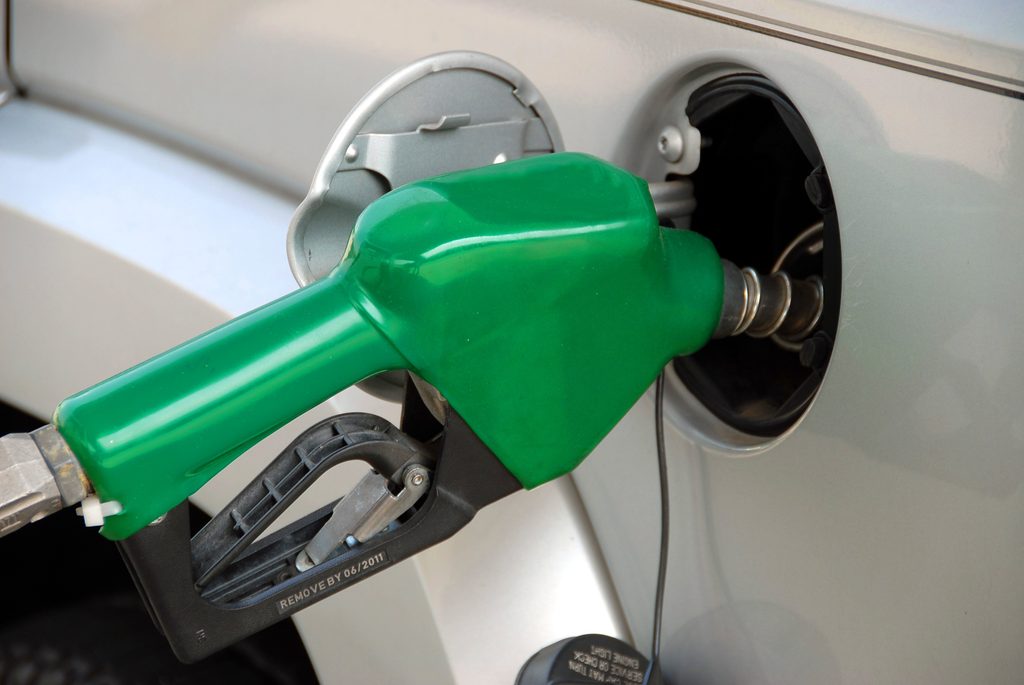
If you want to save money on gas in New York, you have more options than most drivers realize. New York drivers pay 40–80 cents more per gallon than the national average — but most of that extra cost is avoidable with the right strategy.
Use Apps to Save Money on Gas in New York
The single fastest way to save money on gas is to stop filling up at the first station you see. A few apps show every price within a few miles in real time.
GasBuddy is the most widely used gas price app in New York. Open it before you leave home, sort by price, and you can often find a station 15–30 cents cheaper per gallon than the one on the corner. At 15 gallons, that’s $4.50 saved in two minutes of searching. GasBuddy also has a Pay with GasBuddy card that saves up to 25 cents per gallon at participating stations — it pulls directly from your bank account, so there’s no credit card cashback to give up.
Upside is a cashback app that gives you real money back on gas, not points. You claim an offer before filling up, pump your gas, and the cashback hits your account within a day or two. Offers in the New York area regularly run 10–20 cents per gallon. Stack it with a cashback credit card and you’re saving from two directions at once.
Waze shows gas prices along your route while you’re navigating, so you can swing into a cheaper station without going out of your way. It won’t always find the absolute cheapest station in the area, but it’s useful for commutes where you pass multiple stations anyway.
Set a GasBuddy price alert for a few stations near your home or workplace. When prices drop below your target, you get a notification — useful if you have any flexibility on when you fill up.
Where You Fill Up Matters More Than Anything Else
Location is one of the biggest factors when you’re trying to save money on gas in New York. Gas prices vary enormously by location — sometimes by 50 cents or more per gallon within a 10-mile radius. Here is where to go and where to avoid.
Avoid filling up in Manhattan, near airports, and in tourist-heavy areas. Gas in Midtown Manhattan and near JFK, LaGuardia, or Newark regularly runs 40–60 cents more per gallon than suburban stations. If you’re driving in from Westchester or Long Island, fill up before you enter the city.
Head toward the New Jersey border. New Jersey has no self-service surcharge and consistently lower gas taxes than New York. Stations in Fort Lee, Edgewater, and Teaneck near the George Washington Bridge are popular stops for drivers heading into or out of the city. The savings are often 30–50 cents per gallon over comparable Manhattan prices.
Warehouse clubs offer the lowest consistent prices. Costco and BJ’s Wholesale Club gas stations are typically 10–20 cents cheaper than the average station nearby. Locations in Yonkers, Elmsford, White Plains, and elsewhere in Westchester are convenient for members. The only catch is you need a membership (≈$65/year for Costco, ≈$35/year for BJ’s), but if you fill up weekly, you recover that in a few months.
Smaller stations on back roads beat the highway. Stations on I-87, I-95, and other major interstates in New York charge a premium for convenience. If you have five minutes to spare, pull off and look for a local station on a side street — it almost always costs less.
Staten Island and the outer boroughs consistently have cheaper gas than Manhattan. If your route takes you through them, that’s a good place to fill up.
Loyalty Programs and Credit Cards That Cut Your Gas Bill
Supermarket fuel rewards are one of the most underused gas discounts in New York. Stop & Shop’s Gas Rewards program gives you 10 cents off per gallon for every $100 you spend on groceries. Spend $300 in a month and your next fill-up is 30 cents per gallon cheaper. You can use those rewards at participating Shell stations around Westchester and the Hudson Valley. Giant (owned by the same company) runs the same program.
The Stop & Shop Gas Rewards redemption cap is 35 gallons per fill-up, so if you have a large tank or a truck, one trip can save $10 or more. Rewards expire at the end of the calendar month, so check your balance before they reset.
Shell Fuel Rewards work on top of supermarket rewards. Sign up for the free Shell Fuel Rewards card and you automatically save 3 cents per gallon on every fill-up, with additional savings when you link a qualifying credit card. Stack a supermarket reward on top and the discounts combine.
Credit card cashback on gas adds up fast. Several cards pay 3–5% back on gas purchases:
Citi Double Cash Card: 2% back on everything (1% when you buy, 1% when you pay). No annual fee and no category restrictions — straightforward if gas isn’t your single biggest spend category.
Blue Cash Preferred from American Express: 3% back at U.S. gas stations ($0 intro annual fee the first year, then $95/year — worth it if you spend $200+/month on groceries and gas combined).
PenFed Platinum Rewards Visa: 5 points per dollar at gas stations (redeemable for ~1 cent each).
Costco Anywhere Visa by Citi: 5% back on gas at Costco, 4% on other eligible gas and EV charging (combined cap of $7,000/year, then 1%). No annual fee beyond the Costco membership.
If you spend $200/month on gas, a 4% cashback card saves you $96/year — for doing nothing differently.
Avoid paying with credit at full-service stations. Many New York stations charge 10–20 cents more per gallon for credit versus cash. Pay with cash or a debit card at those stations, then use your cashback card at stations that charge the same price for both.
Stacking rewards, cashback, and app discounts is the most reliable system to save money on gas in New York consistently.
Driving Habits That Cut Fuel Use by 10–25%
How you drive affects your fuel economy as much as what you drive. These habits are free and require no equipment.
Accelerate gradually. Hard acceleration is the single biggest fuel-waster in city driving. Pressing the gas gently to reach highway speed uses significantly less fuel than flooring it. In stop-and-go traffic on the Cross Bronx or the Hutch, smooth acceleration can improve your MPG by 10–15%.
Keep highway speeds at 60–65 mph. Fuel economy drops sharply above 65 mph due to air resistance. Driving 75 mph instead of 65 mph uses roughly 15% more fuel. On the Thruway, the middle lane at a steady 65 mph beats weaving at 75 and braking repeatedly.
Anticipate stops and coast. When you see a red light or slowing traffic ahead, take your foot off the gas early and let the car coast to a slow roll rather than braking hard at the last second. Every time you brake, you’re throwing away momentum your engine already burned fuel to create.
Minimize A/C use below 45 mph. At city speeds, air conditioning can reduce fuel economy by 5–25%. Open the windows in stop-and-go traffic. At highway speeds, the drag from open windows costs more than running A/C, so close them and use A/C on the highway.
Don’t idle. Modern engines warm up fine while driving slowly — idling for more than 30–60 seconds wastes more fuel than restarting. If you’re waiting at school pickup or stuck in a line, turn the engine off. New York State law prohibits idling for more than 3 minutes near a school anyway.
Use cruise control on flat roads. Maintaining a consistent speed is more efficient than the small speed fluctuations most drivers introduce on the highway. On flat stretches of I-87 or I-95, cruise control can improve fuel economy by 7–14%.
Car Maintenance That Improves Fuel Economy
A few simple maintenance items pay for themselves in gas savings.
Check your tire pressure monthly. Underinflated tires increase rolling resistance and can reduce fuel economy by 0.5% for every 1 PSI you’re low. In New York winters, tires lose about 1 PSI for every 10°F drop in temperature, so a tire that was properly inflated in October can be 5–6 PSI low by January. The correct pressure is on a sticker inside your driver’s door jamb — not the maximum pressure printed on the tire sidewall. Free air pumps are available at many stations in New York.
Use the right grade of gasoline. Unless your car’s owner manual specifically requires premium (usually 91 octane), you are wasting money buying it. Most modern cars run fine on regular 87 octane. The difference in New York is often 30–60 cents per gallon. If your car “recommends” premium but doesn’t “require” it, regular is almost always fine — the engine management system adjusts automatically.
Keep up with air filter replacements. A clogged engine air filter makes the engine work harder and can reduce fuel economy by up to 10% on older carbureted engines, though the effect is smaller on modern fuel-injected cars. It’s a $15–25 part you can replace yourself in minutes, and it’s worth checking at every oil change.
Don’t ignore a loose gas cap. A loose or missing gas cap allows fuel to evaporate and can trigger a check engine light. It’s also free to tighten. If your check engine light is on, a gas cap issue is one of the first things to rule out.
Plan Trips to Use Less Gas
Combine errands into one trip. A cold engine uses more fuel than a warm one. Short trips — especially in New York winters — are disproportionately expensive per mile because the engine never fully warms up. If you’re going out anyway, plan your stops so you hit the grocery store, dry cleaner, and gas station in one loop instead of three separate trips.
Avoid peak traffic hours. Sitting in stop-and-go traffic on the Saw Mill or Route 9A burns fuel at the worst possible rate — your engine is running, but you’re barely moving. If your schedule allows, leave 30–45 minutes earlier or later to miss the worst congestion. The NYS 511 traffic app and Waze both show real-time conditions.
Use E-ZPass. If you drive in New York regularly and don’t have E-ZPass, you’re leaving money on the table. E-ZPass rates on most New York bridges and tunnels are lower than cash tolls, and discount programs for low-mileage or off-peak travel can lower costs further. The fuel savings from not idling in cash toll lanes add up too.
Consider the commuter train for regular trips into the city. For Westchester residents making regular trips into Manhattan, Metro-North almost always beats driving on total cost once you factor in gas, tolls, parking, and time. A Westchester to Grand Central commute by car can cost $25–40 round trip in gas and tolls alone, versus a Metro-North ticket.
Frequently Asked Questions
Where is the cheapest gas in New York State? Prices vary daily, but consistently cheaper areas include the Southern Tier, the Capital Region around Albany, and upstate cities like Syracuse and Buffalo, where gas taxes and real estate costs for stations are lower. Within the metro area, New Jersey border towns and warehouse club stations in the suburbs offer the best prices. Use GasBuddy to find today’s cheapest station near any location.
Is GasBuddy accurate? Generally yes, with a caveat: prices are crowdsourced from app users, so busy stations in dense areas are updated more frequently than rural or quiet stations. Prices are usually accurate within a few hours for popular stations. Always confirm the price at the pump when you arrive.
Should I pay cash or credit for gas? It depends on the station. In New York, many independent stations post separate cash and credit prices, with cash typically 10–25 cents cheaper. Do the math: if your cashback card pays 3% and the gas costs $3.80/gallon, your cashback is about 11 cents — which barely covers the credit surcharge at most stations. If the cash discount exceeds your card’s cashback, pay cash.
Does premium gasoline improve fuel economy? Not unless your engine requires it. In cars that run on regular 87 octane, premium provides no performance or efficiency benefit — it’s extra cost for nothing. Check your owner’s manual: if it says “unleaded regular” or “minimum 87 octane,” there is no benefit to buying premium.
How much can I realistically save per month using these tips? For a typical New York driver filling up 15 gallons twice a month: finding a station 20 cents/gallon cheaper saves $6 per fill-up or $12/month. Adding a supermarket fuel reward of 20 cents/gallon saves another $6/fill-up. Using a 4% cashback card saves roughly $4.50/month. Combined, that’s $20–$25/month — one of the easiest ways to save money on gas in New York without changing how much you drive.
Related Articles on FrugalSales.com
Is an Electric Vehicle Worth It in New York? EV vs. Gas Cost Calculator — Run the numbers on whether switching to electric makes financial sense for your commute and driving habits.
Cheapest Parking Near NYC — Apps, garages, and strategies for cutting your parking costs when you do drive into the city.
Credit card terms, cashback rates, annual fees, and product availability are subject to change at any time. Verify current offers directly with the card issuer before applying. Gas prices, station availability, and app features are accurate as of the publication date and may vary.